
刊行物

- HOME
- 刊行物のご案内
- 日本心理学会機関誌への投稿論文に求める倫理的配慮についての判断方針
Ethical Policy for Reviewing Manuscripts Submitted to the Official Journals of the Japanese Psychological Association
刊行物のご案内
日本心理学会機関誌への投稿論文に求める倫理的配慮についての判断方針
Ethical Policy for Reviewing Manuscripts Submitted to the Official Journals of the Japanese Psychological Association
所属機関の研究倫理審査委員会等の承認について
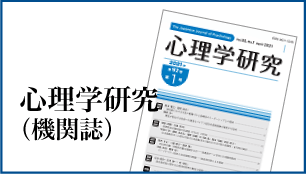
これまで,日本心理学会では,機関誌「心理学研究」,"Japanese Psychological Research" へ投稿いただく際に,論文内で実施された研究について,所属機関または関連機関の研究倫理審査委員会等の承認を得ることが必須にはなっておりませんでした(ご所属によっては研究倫理審査委員会等が設置されていない場合や,分野によっては,研究倫理審査委員会等の承認を得る必要がない場合があるため)。
しかしながら,昨今の研究倫理の状況などを鑑み,日本心理学会の機関誌「心理学研究」,"Japanese Psychological Research" においても,2026年4月以降の投稿論文については,原則として,所属機関または関連機関の研究倫理審査委員会等の承認を得ることを必須といたします。
各種規程・指針
詳細は以下をご確認ください。
- ・公益社団法人日本心理学会 倫理規程
- ・日本心理学会機関誌への投稿論文に求める倫理的配慮についての判断方針
- ・本研究は,第1著者が所属する機関における倫理委員会の承認を得て実施された(承認番号XXXXX)。
- ・本研究は,A大学A研究科の倫理委員会の承認を得て実施された。(No. XXXXX)
- ・The study was approved by the Institutional Review Board of XXXX University.
- ・The study was approved by the Research Ethics Committee of A University(No. XXXXX)
本文中の表記について
所属機関の研究倫理審査委員会等の承認を得られた場合は,投稿論文の本文にその旨を記載してください。
ただし,日本心理学会の機関誌は,匿名査読となっているため,投稿段階で本文中に記載する場合は,以下のように正式名称は伏せて,記載してください。
研究の分類例
| 研究倫理審査委員会等の審査が必要とされる研究の例 | 介入研究・治療研究,実験研究,インタビュー,面接研究,質問紙調査研究(横断的・縦断的),観察研究など,研究としての新規性があり,介入の有効性の判定や侵襲性を伴う症例研究・生体情報を取得・取り扱う研究,要配慮個人情報・個人情報を扱う研究。ヒト以外の動物を対象とする研究。関連法規および所属機関や所属団体等の関連指針のもとで実施している研究。 |
|---|---|
| 研究倫理審査委員会等の審査が不要とされる研究の例 | メタ分析,システマティックレビュー,ナラティブレビュー,通常行われていると理解される範囲での症例報告(カウンセリング,心理療法)*,オープンデータの利用,その他特別な事情のある研究。 |
*参加者から書面等の記録に残る形で研究使用の同意を得たうえで,個人情報保護法および関連法令等を遵守する。
フロー図
外部機関の承認] B -->|承認あり| R1[通常の査読へ] B -->|承認なし| C[承認を得ていない理由
(倫理委員会の承認が不要な研究を含む)] C -->|理由が妥当ではない| R2[不採択,
デスク・リジェクション] C -->|理由が妥当である| R1 %% ←ここで全リンクを直線にする設定 linkStyle default interpolate linear
倫理チェックリスト
2026年4月より,投稿時の倫理チェックリスト内の倫理委員会に関する項目を更新します。
以下,該当項目のみ表示(※実際の画面表示とは異なります。)
| No. | 問 |
|---|---|
| 1 | 研究を行うにあたり,所属または関連機関の倫理委員会の承認を得ましたか。
承認を得ている場合は,本文内にその旨を記載いてください。 ※ただし,採択となるまでは具体的な機関名などは記載せず,XXX大学などと著者情報を伏せてください。 ○はい ○いいえ |
| いいえの場合,承認を得なかった理由を書いてください。
※適切と判断されない場合は,不採択・デスク・リジェクションと判定される場合があります。 (自由記述欄) |
Approval by Institutional Research Ethics Committees
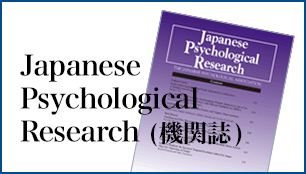
For manuscripts submitted to Japanese Psychological Research on or after April 2026, authors are, in principle, required to obtain approval from their institutional or relevant research ethics committee.
Policy
For details, please refer to the following policy.
- ・Ethical Policy for Reviewing Manuscripts Submitted to the Official Journals of the Japanese Psychological Association
- ・The study was approved by the Institutional Review Board of XXXX University.
- ・The study was approved by the Research Ethics Committee of A University(No. XXXXX)
Statement in the Main Text
When approval has been obtained from an institutional or relevant research ethics committee, authors must state this explicitly in the manuscript.
However, as Japanese Psychological Research operates under a double-blind peer review system, the official name of the institution must be anonymized at the submission stage. Authors should use wording such as the following:
Examples of Research Categories
| Research Requiring Ethical Review |
|---|
| Intervention and treatment studies, experimental studies, interviews, interview-based research, questionnaire surveys (cross-sectional or longitudinal), observational studies, case studies involving evaluation of intervention effectiveness or invasiveness, studies involving the collection or use of biometric information, and studies handling sensitive personal information or personal data. Research involving non-human animals, conducted in accordance with relevant laws and regulations and the applicable guidelines of the researcher’s affiliated institution or organization. |
| Research Not Requiring Ethical Review |
| Meta-analyses, systematic reviews, narrative reviews, case reports conducted within the scope of routine practice (e.g., counseling or psychotherapy)*, use of open datasets, and other research conducted under special circumstances. |
*When ethical review is deemed unnecessary for routine clinical practice or standard case reports, authors must obtain participants’ consent for research use in a form that leaves a written or otherwise recorded record. Authors must also comply with the Act on the Protection of Personal Information and all relevant laws and regulations.
Flow of Ethical Review Assessment
or external body] B -->|Approval obtained| R1[Proceed to regular peer review] B -->|Approval not obtained| C[Reason for not obtaining approval
(Including cases where ethical review is not required)] C -->|Reason deemed inappropriate| R2[Rejection,
Desk Rejection] C -->|Reason deemed appropriate| R1 %% ←ここで全リンクを直線にする設定 linkStyle default interpolate linear
Ethics Checklist
From April 2026, the ethics committee–related items in the submission ethics checklist will be updated.
Below are the relevant items only (Note: This does not reflect the actual screen layout.).
| No. | Question |
|---|---|
| 1 | Have you obtained approval from an ethics committee of your affiliated or related institution to conduct this research?
If Yes: Please state this in the manuscript. Until acceptance, do not specify the actual institution name; anonymize it (e.g., “XXX University”). ○ Yes ○ No |
| If No:
Please explain the reason why approval was not obtained. If the reason is judged to be inappropriate, the manuscript may be rejected without peer review (desk rejection). (Free-text field) |